VAT tiers & reverse charge
Latvia has four VAT rates and a separate reverse-charge mechanism. Understanding the difference means getting invoices right from the start. This article explains each rate and when reverse charge enters the picture.
The Latvian VAT rates
Latvia operates four VAT rates:
- 21 % — standard rate. Applies to most goods and services sold in Latvia.
- 12 % — reduced rate. Applies to medicines and medical devices, district heating, and fresh local agricultural produce (permanent rate from 1 January 2026).
- 5 % — reduced rate. Applies to digital books, press publications, and media subscriptions.
- 0 % — zero rate. Applies to exports outside the EU and intra-EU supplies to VAT-registered buyers in other member states.
Reverse charge is not a rate
Domestic reverse charge applies to specific sectors where fraud risk is higher: timber and wood products, construction services, scrap metal and secondary raw materials, IT devices and electronics, and cereals and oilseeds.
If you sell goods or services from these categories to a VAT-registered buyer in Latvia, the buyer — not the seller — is responsible for accounting for VAT. Your invoice should note "Reverse charge VAT applies" (or the Latvian equivalent), and you do not show a VAT amount.
fakts marks reverse-charge lines separately and generates the correct document wording. If you're unsure whether your transaction falls into a reverse-charge category, check with your accountant.
Picking the right rate per line
When building an invoice, each line item has a dropdown for the VAT rate. fakts offers all four standard rates and the reverse-charge option.
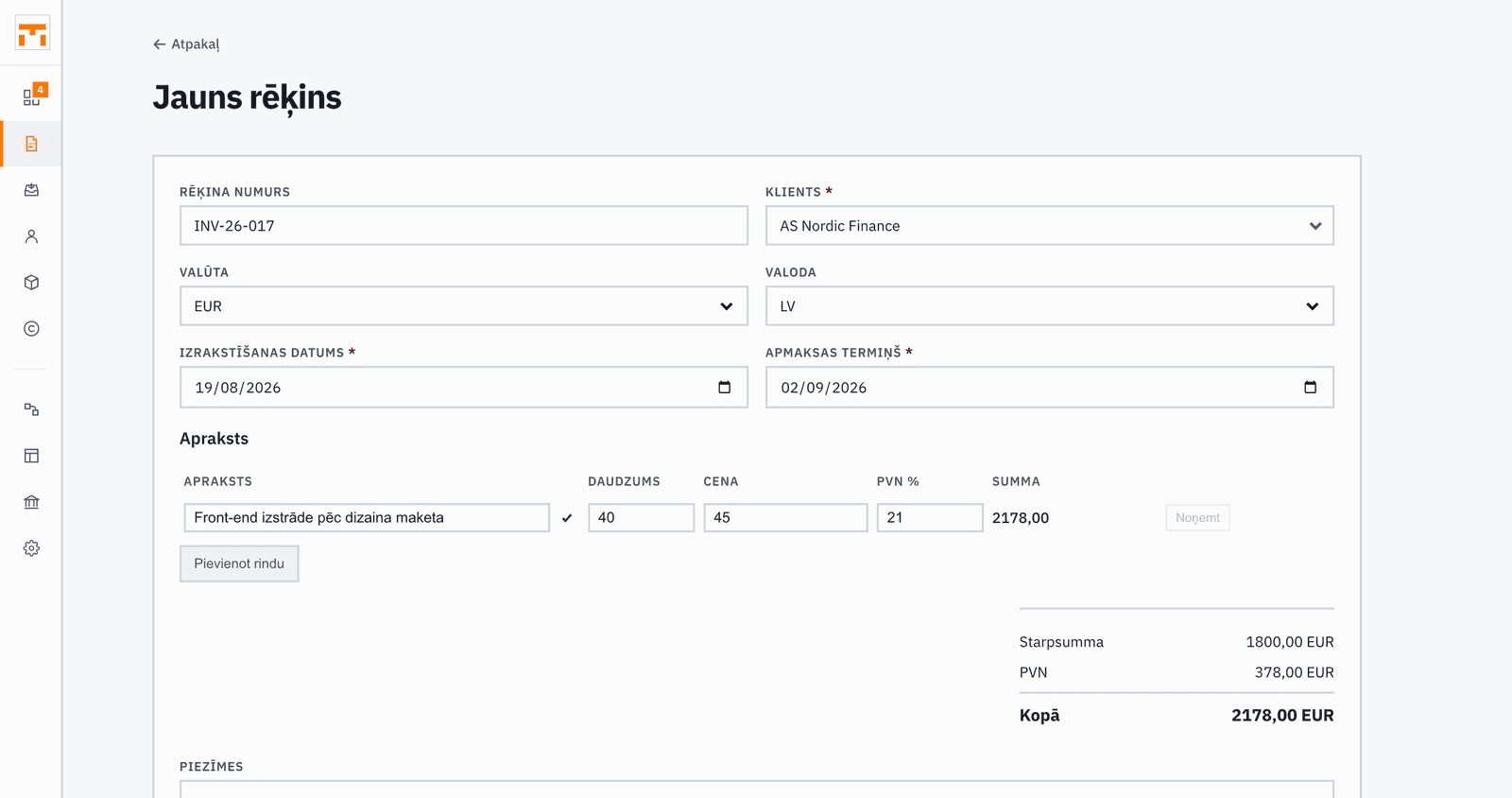
Quick reference:
- Standard services and goods — 21 %.
- Fresh food sales (from 2026-01-01) — 12 %.
- Books, press, or media subscriptions — 5 %.
- Exports outside the EU or supply to an EU VAT-registered buyer — 0 %.
- Timber, construction, scrap metal, IT devices, cereals — possibly reverse charge.
Zero-rate: exports & intra-EU
The zero rate applies when goods physically leave the EU (export), or when you sell goods to a VAT-registered buyer in another EU member state (intra-community supply).
Zero-rate does not mean the transaction is VAT-exempt — it means the rate is 0 %. Unlike exemption, the zero rate gives you the right to recover input VAT on related costs. This distinction matters for VAT accounting purposes.
For cross-border services within the EU, the rules depend on the type of service and where the buyer is established. If you have EU clients for services, ask your accountant to confirm which rules apply to your situation.